
Financial Sustainability
My last full day in Brussels. I had an 11 am Zoom meeting with Giovanni, the advisor of sustainable finance, and then had the rest of the day to explore. Giovanni typically works at the ConfCooperative HQ in Brussels but was on a business trip so I went to HQ and we met over Zoom. Giovanni works within the banking sector and was elected to the board of banks in 2018 and in 2019 came to Brussels to work. Of course I went into this meeting, like many others, with minimal knowledge and left with an abundance.
Overall there are more than 200 co-op banks and they are all independent. They are much more common in Europe than in the US. They are also much smaller than those of the US with typically less than 10 branches. They are very popular because they withstood the 2008 banking crisis in more than 600 municipalities, leaving only co-ops left. The criteria is that they can only operate with members within municipalities in which the bank operates. The banks must reinvest in their municipalities and 97% of that must be invested in things that have a direct impact on where the bank is operating. Banks can reach other municipalities, but new branches must be close to where the bank is already present. In 2016 there was a reformation that all independents must be pledged to a parent company and that company is owned by all of the different co-op banks (like shares), but it is not possible for external investors. The independent groups are at the top of the pyramid, controlling the parent banks, while the parent banks provide support to the independent banks. An example of this would be the parent company aiding in digital payments to keep the independent banks relative in the market. The parent banks are also in charge of risk management and can put pressure on the independent banks if they are not performing well. The national association that represents all co-op banks is called Federcasse. Think of it like ConfCooperative, but solely for the financial sector. Federcasse lobbies and pushes forward legislation for the banks.
Moving into the topic of sustainability, the sustainable finance goal is net 0 carbon emissions. In order to achieve this an action plan must be created. Legislature is in the work to bring private and public investors into play. The private investors would put money into the bank and the bank would then invest that money in a sustainability project. So far there has been a large data shortage about sustainability. Company reporting has been recently prioritized in order to measure and then monitor environmental and social sustainability. It would be organized in the way of a sustainability balance sheet. New standards in Europe were recently published and Giovanni and others are working to establish them internationally. As of 2 years ago a new taxonomy regulation was set as follows. Each aspect of business must be sustainable and disclosure of how many economical aspects align with this regulation are not mandatory. Now the disclosure of this can negatively affect a company if aspects are not changed to align with the new regulations, a form of motivation. An important key to this is defining sustainability so that these aspects can be measured. The next step is to define social economy and apply it across borders in the industry.
Exporing Brussels
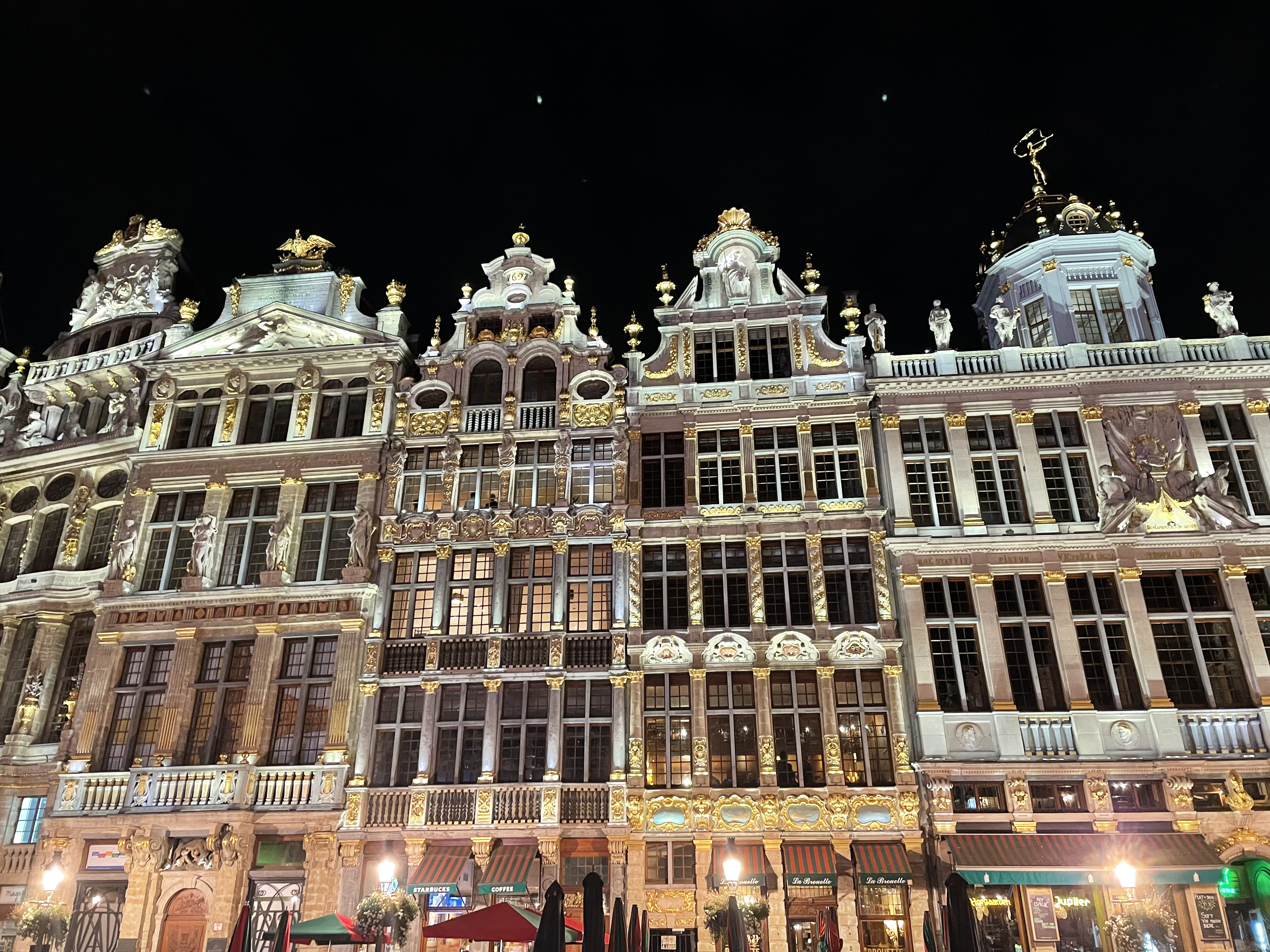
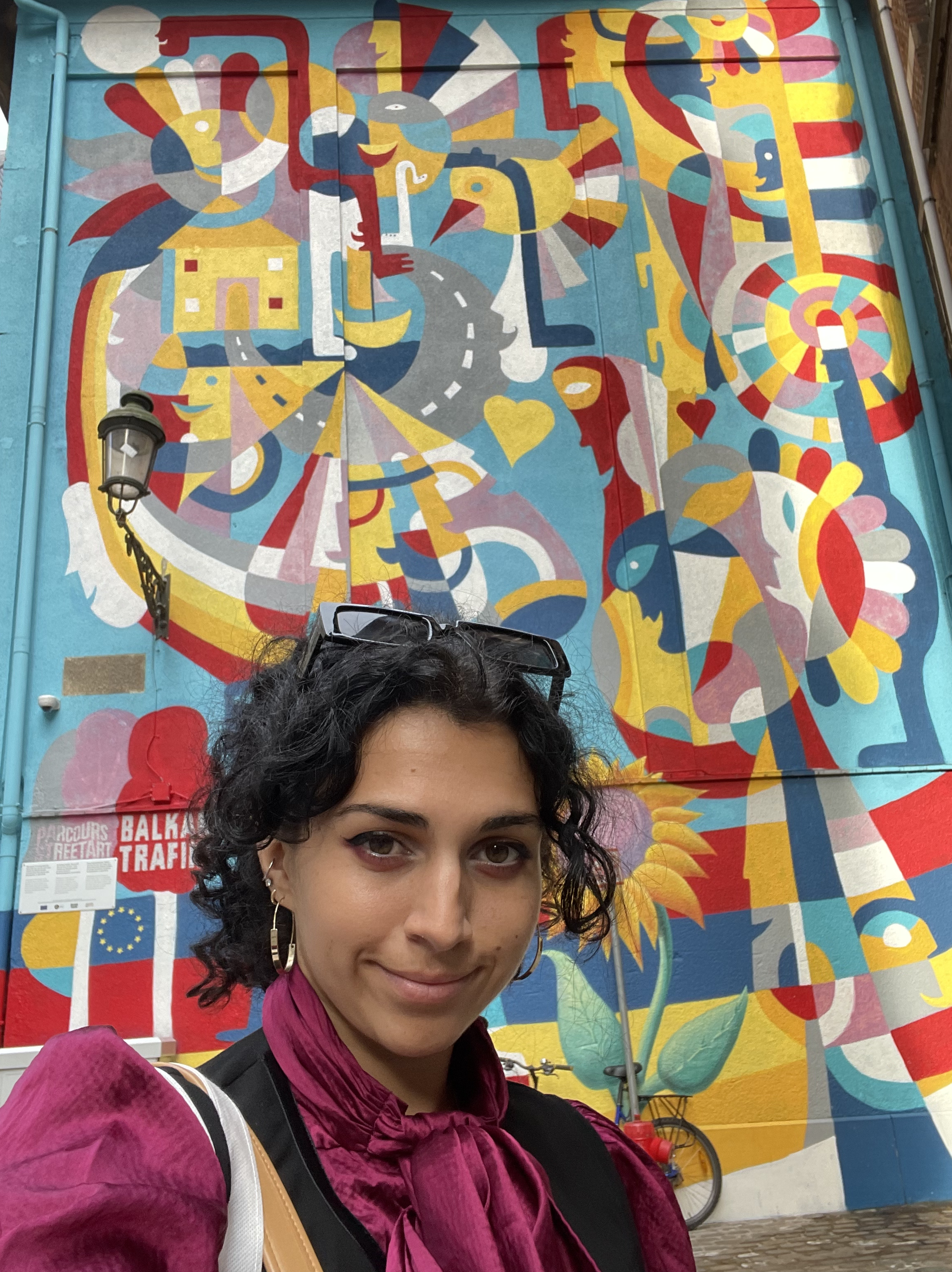
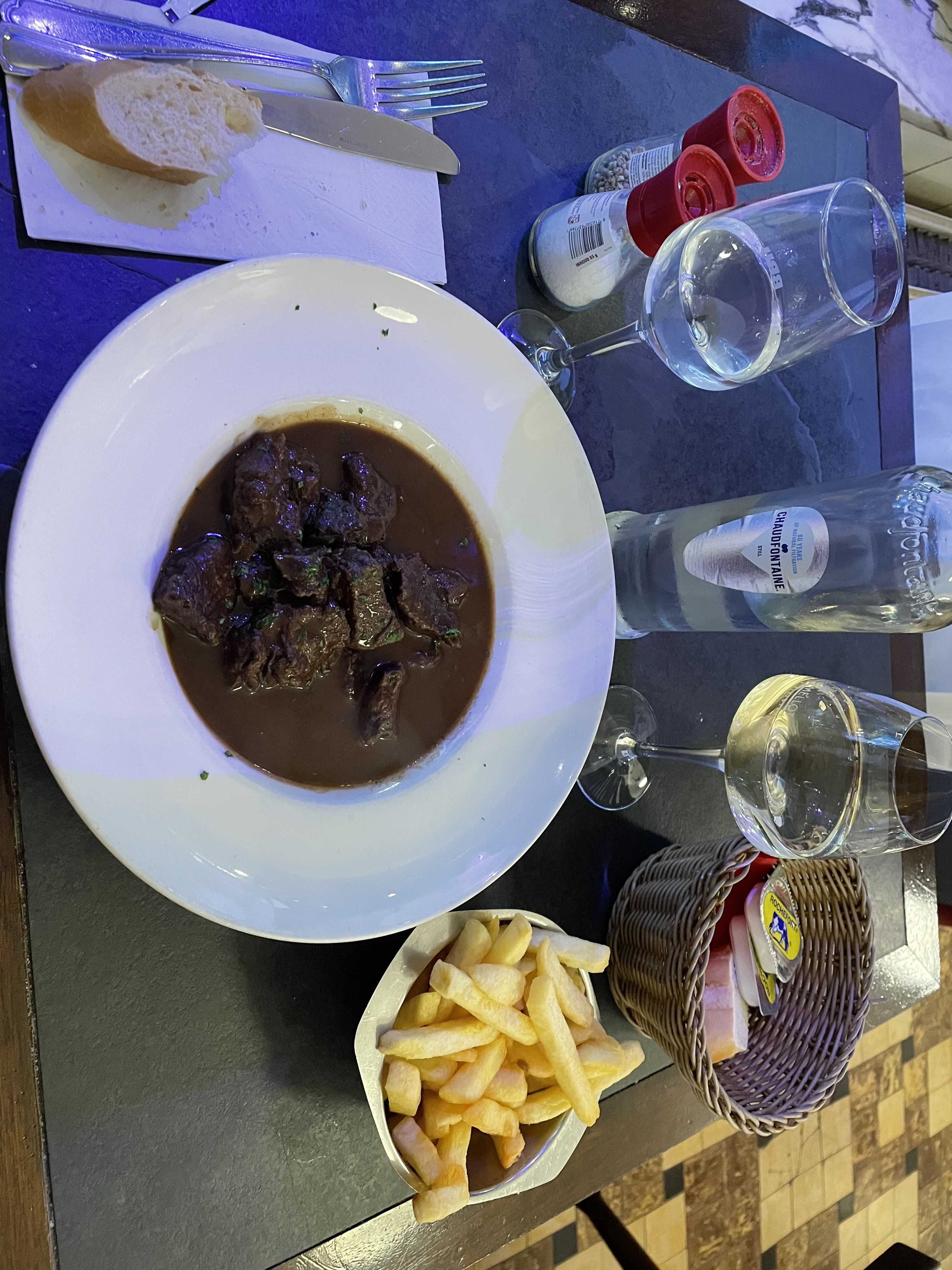
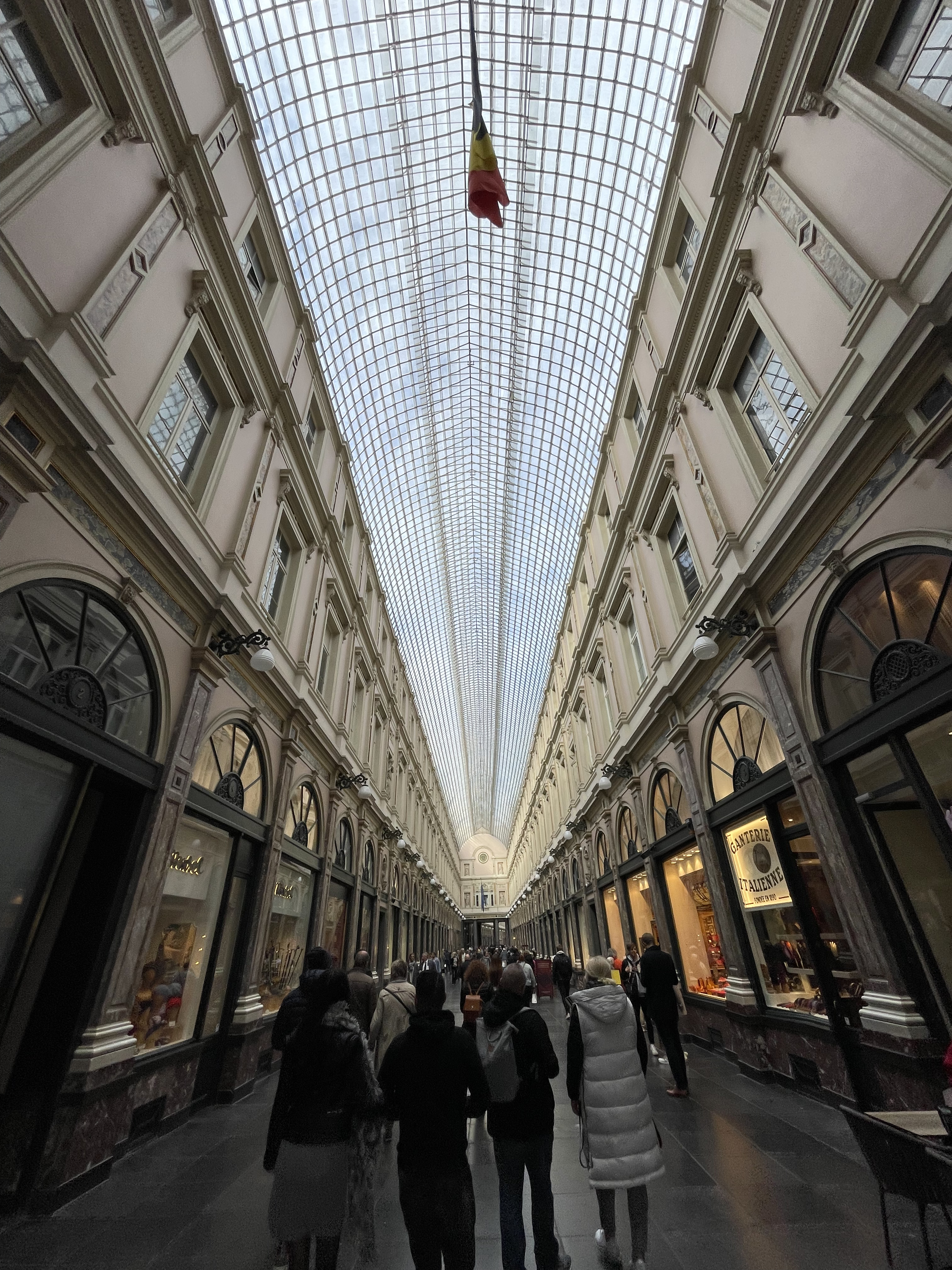
After my meeting with Giovanni I said goodbye to Alessia and went back to my hotel for a quick outfit change. I dressed to impress since it was my last day and went out to do my favorite thing, shop. I think I went to at least 10 vintage shops and took my sweet time in each. I purchased a couple pieces to add to the collection I had created over my travels and then did some other shopping. I couldn’t return home without some Belgian chocolate. I went to both Pierre Marcolini and Neuhaus to try some truffles and pick out some chocolate to bring back to my family. I did some more souvenir shopping and even came across an antique shop that was closing where I purchased vintage Dior perfume. I made my way to the Grand-Place de Bruxelles, or the main square, and was absolutely blown away. Before this trip I had been to 18 different countries and Belgium was not one of them. Some may call it poor planning, but I tend to not do any research about where I am traveling. That may be why I accidentally flew into the wrong airport, but I like to look at it as a big surprise. That being said, I knew nothing about the architecture of Brussels. The square is surrounded by the most beautiful buildings completely covered in gold accents that looked beautiful in both daylight and moonlight. I made sure to see both. I also walked to the “Manneken Pis,” or peeing boy statue. It was underwhelmingly small, but gave me a good laugh. The last thing I did was sit down to have a real Belgian meal. Federico informed me of carbonnade flamande and so that is exactly what I ordered. I went to Le Pre Sal as recommended and ordered a side of fries, also recommended. I am not one for beer so I opted out of that, but the meal wasn’t bad. It was somewhat of a beef stew with beer sauce. It wasn’t my favorite, but as a picky eater that’s no indication for anyone else. The fries on the other hand were amazing.


 International Cooperative Immersed
Leave a comment